
Home Loan Eligibility Guide in India (2026): How to Qualify for the Highest Loan Amount and Lowest Rates
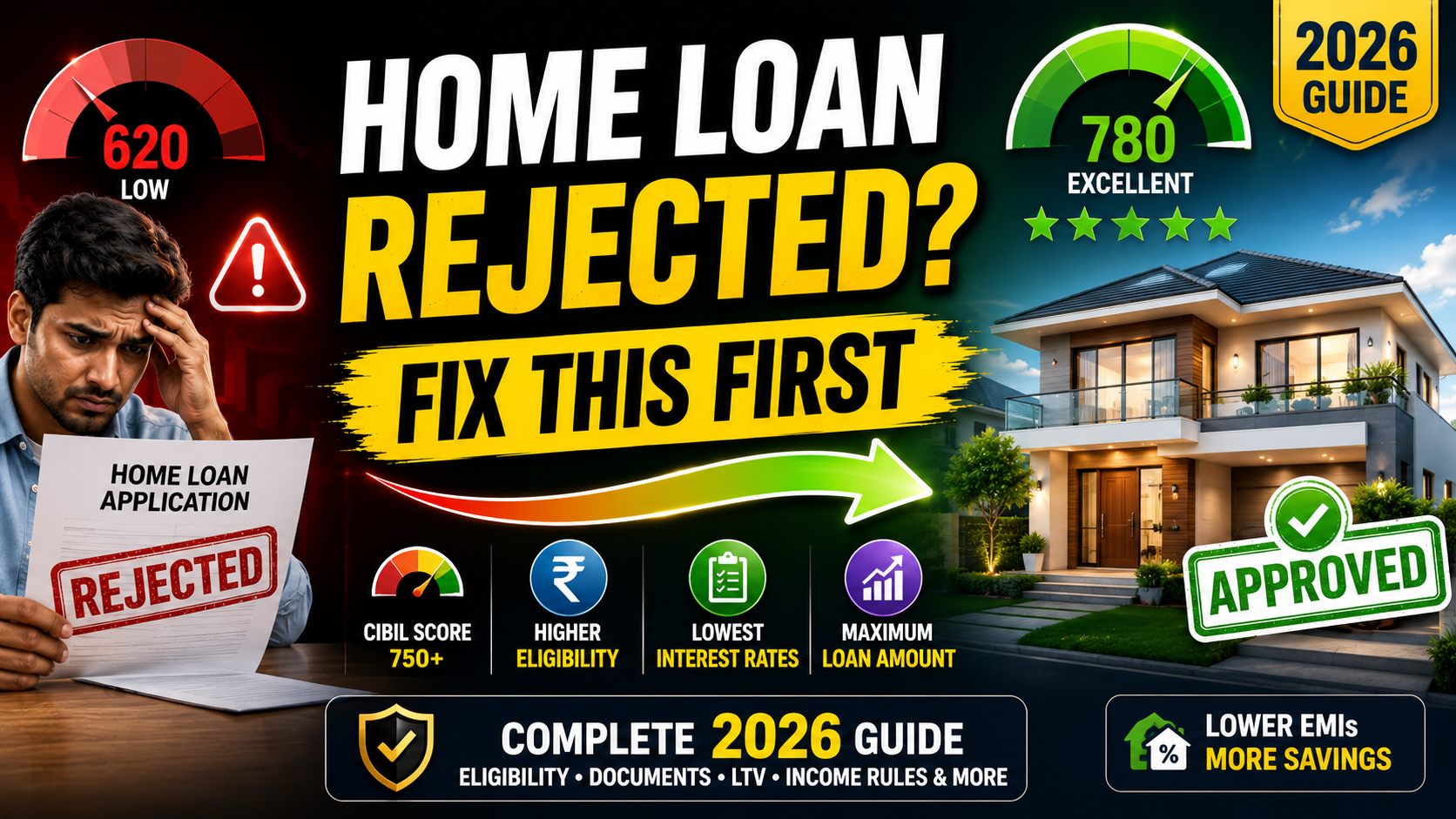
In 2026, securing a home loan in India has become more accessible for disciplined borrowers, yet stricter in ways that reward financial stability. With RBI-mandated updates to Loan-to-Value (LTV) ratios and faster credit reporting cycles delivering weekly updates, your eligibility is a dynamic assessment of repayment capacity, credit behaviour, and property specifics. A well-prepared applicant with a strong CIBIL score and stable income can now access up to 90% financing on smaller properties, longer tenures, and rates starting as low as 7.1-8.2% for salaried borrowers. This guide breaks down every criterion with 2026-specific nuances drawn from RBI guidelines and major lenders to help you move from borderline eligible to premium offer.
In This Guide
- 1. Age and Residency: The Non-Negotiable Foundation
- 2. Income Stability: The Heart of Repayment Capacity
- 3. Credit Score: Your Financial Passport (750+)
- 4. Loan-to-Value (LTV) Ratio: How Much Banks Finance
- 5. Property Type and Legal Clarity
- 6. Documents Required: 2026 Checklist
- 7. Proven Ways to Maximise Your Eligibility
- 8. Your 2026 Action Plan
1. Age and Residency: The Non-Negotiable Foundation
Lenders set strict age brackets to ensure the loan is fully repaid while you are still earning. For salaried applicants, the typical window is 21-23 years at application and maximum 65-67 years at loan maturity. Self-employed professionals and business owners often receive slightly more flexibility - up to 70 years at maturity.
Residency rules are straightforward: you must be an Indian citizen or a permanent resident. NRIs and PIOs qualify under separate schemes but usually need higher down payments and proof of repatriation of overseas income. A joint application with a spouse or earning family member can extend effective eligibility by combining ages and incomes.
Practical tip: A 32-year-old salaried professional can comfortably take a 30-year loan (repayment until age 62). A 45-year-old may be capped at 20-22 years. This directly affects EMI affordability and the maximum loan amount you can qualify for.
2. Income Stability: The Heart of Repayment Capacity
Income remains the single largest factor in determining how much you can borrow. Banks calculate the Fixed Obligations to Income Ratio (FOIR) - your total EMIs (including the proposed home loan) divided by net monthly income. Most lenders cap FOIR at 40-55%, with 50% being the practical sweet spot for best rates.
Salaried applicants need a minimum net monthly income of ₹25,000-30,000 (higher in metros), at least 2 years of total experience, and 6-12 months in the current job. Bonuses and variable pay are considered at 50-70% weight. Self-employed applicants face a higher bar: ₹30,000+ monthly average profit or ₹5-6 lakh annual income, supported by 2-3 years of ITRs, audited financials, and GST returns.
Adding a co-applicant (working spouse or parent) with stable income can boost eligibility by 30-50%. In practice, many young couples with combined monthly income of ₹1.5 lakh+ now easily qualify for ₹80 lakh-₹1.2 crore loans at comfortable EMIs.
3. Credit Score: Your Financial Passport (750+ Unlocks the Best Deals)
A CIBIL score of 750 and above is the gold standard in 2026. At this level you get the highest approval odds, lowest interest rates (often 0.25-0.50% better than the 700-749 band), and maximum LTV ratios.
Scores of 700-749 are still acceptable but may attract marginally higher rates or require a co-applicant. Below 650, options shrink dramatically and rates can jump to 10%+. With RBI-mandated weekly credit reporting now standard, 3-6 months of flawless payment behaviour can push a 680-720 score into the premium bracket before you apply.
4. Loan-to-Value (LTV) Ratio: How Much the Bank Will Actually Finance
RBI’s 2026 LTV guidelines make smaller homes significantly more affordable:
| Property Value | Maximum LTV | Minimum Down Payment |
|---|---|---|
| Up to ₹30 lakh | 90% | 10% |
| ₹30 lakh - ₹75 lakh | 80% | 20% |
| Above ₹75 lakh | 75% | 25% |
Stamp duty, registration, and other transaction costs are largely excluded from LTV calculations for properties under certain thresholds. A ₹25 lakh ready-to-move flat can therefore be financed up to ₹22.5 lakh, leaving you to fund only ₹2.5 lakh plus minor costs. Banks still conduct their own valuation, so over-optimistic seller pricing can reduce effective LTV.
5. Property Type and Legal Clarity
Only approved residential properties qualify. RERA-registered projects, ready-to-move flats with occupancy certificate, and self-construction on owned plots are eligible provided they have clear title and municipal approvals. Resale properties require an encumbrance certificate and a chain of title spanning 30+ years in most states.
Under-construction projects remain popular but attract stricter scrutiny on developer credentials and project timelines.
6. Documents Required: Salaried vs Self-Employed (2026 Checklist)
**Salaried Applicants:** PAN (mandatory), Aadhaar, last 3 months’ salary slips, Form 16 for 2 years, 6 months’ bank statements showing salary credits, and employment proof.
**Self-Employed Applicants:** ITRs for 2-3 years with audited P&L and balance sheet, GST registration, shop act/company documents, and 6-12 months’ bank statements (business + personal).
**Common to Both:** Property documents (agreement to sell, title deed, approved building plan, NOC from society, encumbrance certificate) plus photographs and application form.
7. Proven Ways to Maximise Your Eligibility
Boost your CIBIL score to 750+, add a strong co-applicant, reduce existing EMIs by paying down personal loans or credit cards before applying, opt for longer tenure initially (prepayment is free on floating-rate loans in 2026), choose properties under ₹30 lakh for 90% LTV, and get pre-approved before house hunting - this strengthens your position with sellers and developers.
8. Your 2026 Action Plan
1. Pull your latest CIBIL report and fix any errors immediately.
2. Use online calculators on SBI, HDFC, and BankBazaar to benchmark realistic loan amounts.
3. Gather all documents in a single digital folder.
4. Shortlist 2-3 lenders (SBI for lowest rates on smaller loans; HDFC/ICICI for faster processing and higher LTV flexibility).
5. Apply for pre-approval - it is usually valid for 3-6 months and carries no obligation.
6. Finalise the property only after receiving in-principle sanction.
A home loan is the largest financial commitment most people ever make. In 2026’s environment of moderated rates, liberal LTV norms, and zero prepayment penalties on floating loans, the rewards for strong preparation have never been higher. Borrowers who treat the process as a 6-12 month project consistently secure larger loans at lower costs and close deals faster. The difference between a ₹40 lakh offer at 9.5% and an ₹80 lakh offer at 8.2% over 25 years can exceed ₹50 lakh in total interest savings.

Himangshu Mishra
Personal Finance Writer & Credit Card Analyst
3+ years researching Indian credit cards, banking products, and personal finance. Tracks RBI policy changes, bank fee revisions, and reward programme devaluations in real time.
Related from Personal Finance

How to Improve Your CIBIL Score in India (2026 Tips): From Average (650-750) to Excellent (750+)
In India’s fast-evolving credit landscape of 2026, your CIBIL score is far more than a three-digit number-it is the silent gatekeeper to financial opportunities. Whether you are eyeing a home loan at 8.5% instead of 10.5%, a personal loan with minimal processing fees, or simply better terms on a car EMI, a score of 750 or above unlocks preferential treatment from lenders. Below 650, approvals become uphill battles with higher interest rates and stricter scrutiny. The national average sits in the 700-750 range, meaning millions are just one disciplined push away from elite status. With RBI’s weekly credit reporting now standard, positive changes reflect faster than ever before. This guide delivers battle-tested, 2026-specific strategies to accelerate your journey from average to excellent.

Loan Against Fixed Deposit in India (2026): Complete Guide to Features, Rates, Eligibility & Smart Strategies
In 2026, Loan Against Fixed Deposit (LAFD) remains one of the smartest, lowest-cost ways to unlock liquidity without breaking your savings. With FD rates still hovering in the 6-7.75% range, LAFD lets you borrow at just 1-2% above your deposit rate while your FD continues earning full interest. This creates a net borrowing cost that is often 70-80% lower than personal loans or credit cards. This guide draws on the latest June 2026 policies from SBI, HDFC, ICICI, Axis, Yes Bank, and RBI guidelines to help you use this facility effectively and responsibly.

Credit Card Settlement Impact on CIBIL Score in India (2026): Everything You Need to Know Before You Settle
If you’re struggling with a big credit card bill you simply can’t pay, the bank may offer you a “settlement”. You pay a smaller lump-sum amount and the rest is waived. Sounds like relief, right? But before you say yes, you need to understand exactly what it does to your CIBIL score. In this simple and honest 2026 guide, we explain everything in plain English - no complicated banking jargon.