
Credit Card Settlement Impact on CIBIL Score in India (2026): Everything You Need to Know Before You Settle
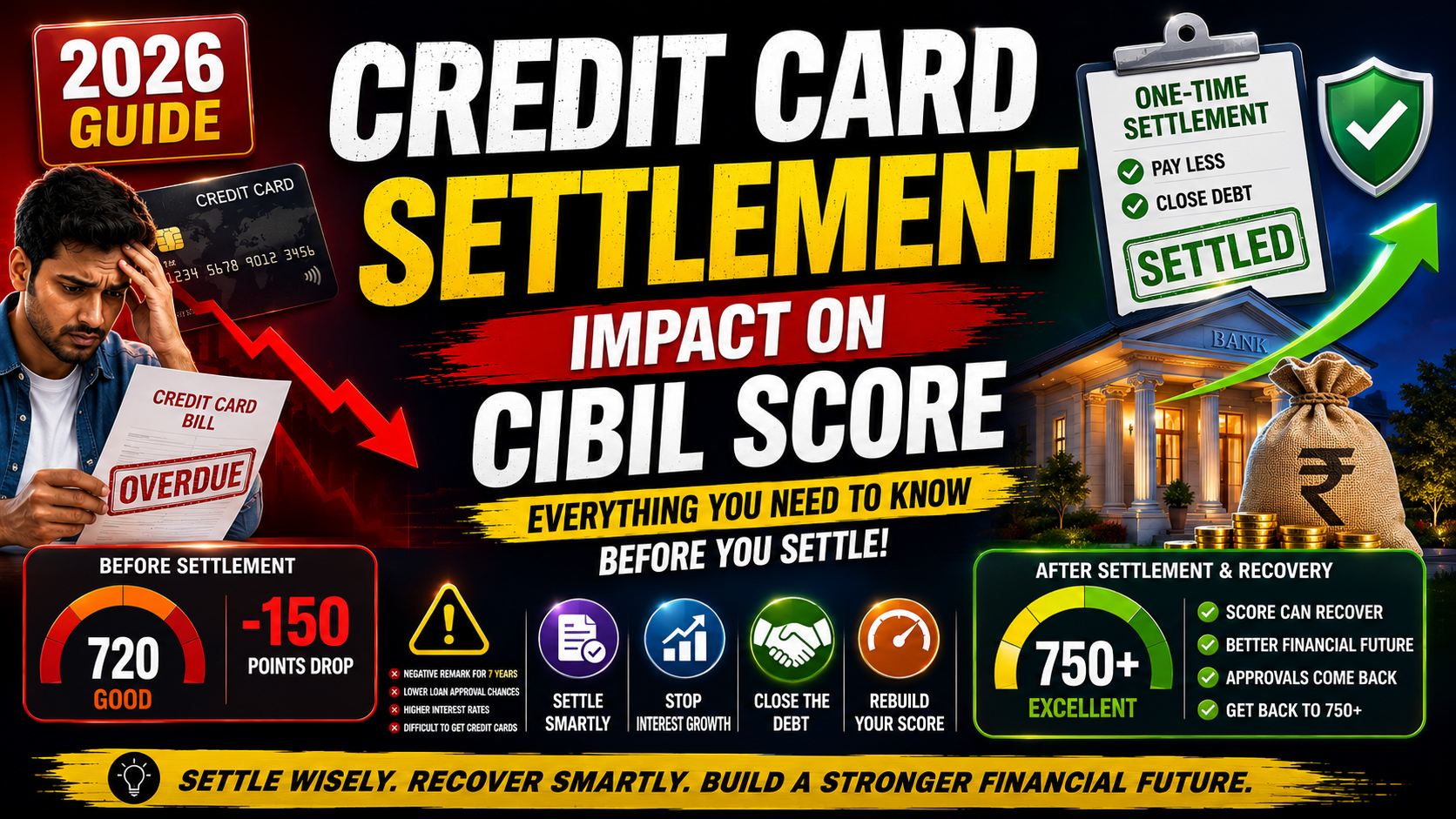
If you’re struggling with a big credit card bill you simply can’t pay, the bank may offer you a “settlement”. You pay a smaller lump-sum amount and the rest is waived. Sounds like relief, right? But before you say yes, you need to understand exactly what it does to your CIBIL score. In this simple and honest 2026 guide, we explain everything in plain English - no complicated banking jargon.
In This Guide
- What Is Credit Card Settlement?
- RBI Guidelines for Credit Card Settlement in 2026
- How Settlement Affects Your CIBIL Score
- Typical Settlement Percentages Banks Accept
- Advantages and Disadvantages
- Step-by-Step: How to Settle Your Credit Card
- How to Rebuild Your CIBIL Score After Settlement
- Frequently Asked Questions
What Is Credit Card Settlement?
Credit card settlement (also called One-Time Settlement or OTS) is an agreement where the bank accepts a single lump-sum payment that is lower than your total outstanding amount. The remaining balance is written off.
Example: You owe ₹1,20,000 (including interest and late fees). After talking to the bank, they agree to settle the entire debt if you pay ₹52,000 in one go. Once you pay, the account is closed and marked as “Settled” in your credit report.
RBI Guidelines for Credit Card Settlement in 2026
The Reserve Bank of India allows banks to offer settlements, but they must follow clear rules. Banks have to have a written policy. They cannot harass you with calls outside 8 AM-7 PM or use abusive language. After you pay the settled amount, the bank must give you a No Objection Certificate (NOC) within 15-30 days.
Settlement is treated as a compromise, not full repayment. This is important because it directly affects how your credit report looks.
How Settlement Affects Your CIBIL Score
This is the most important part. When you settle, your account status changes to “Settled” or “One Time Settlement”. CIBIL sees this as a negative event because you did not pay the full original amount.
Real impact in 2026:
• Your score usually drops 75-150 points immediately.
• The negative remark stays on your credit report for 7 years.
• The damage is strongest in the first 2-3 years and slowly becomes less severe after that.
Real example: Rahul owed ₹1.8 lakh on his Axis card. He settled for ₹72,000. His CIBIL fell from 720 to 580 in one month. Two years later, with perfect payments on other accounts, it recovered to 685.
| Default Period | Typical Settlement % | Example (₹1 lakh outstanding) | Who Usually Gets This |
|---|---|---|---|
| 3-6 months | 60-70% | ₹60,000 - ₹70,000 | Moderate hardship cases |
| 6-12 months | 45-60% | ₹45,000 - ₹60,000 | Job loss or medical bills |
| 12+ months | 30-50% | ₹30,000 - ₹50,000 | Strong proof of hardship |
| Very old debt | 20-40% | ₹20,000 - ₹40,000 | With legal help |
Advantages and Disadvantages
Before you decide, here is a clear picture of both sides.
- Immediate relief - interest stops growing
- Avoids court cases or recovery agent visits
- Cheaper than paying the full amount if you really cannot afford it
- Better than staying in long-term default
Disadvantages are equally important:
- Big drop in CIBIL score (75-150 points)
- Negative remark stays for 7 years
- Future loans and credit cards become difficult or more expensive
- Some banks impose a 12-month cooling-off period
- The waived amount may be taxable as income
Step-by-Step: How to Settle Your Credit Card in 2026
Follow these steps for the best possible outcome.
- 1
Stop using the card completely
- 2
Gather proof of your hardship (job loss letter, medical bills, salary slips)
- 3
Write a polite settlement request letter (sample available below)
- 4
Call the bank’s recovery team and negotiate
- 5
Get the settlement offer in writing with “full and final settlement” mentioned
- 6
Pay the agreed amount in one lump sum
- 7
Ask for the No Objection Certificate within 15-30 days
- 8
Check your CIBIL report after 30-45 days to confirm the update
How to Rebuild Your CIBIL Score After Settlement
The good news is that the damage is not permanent. Many people go from 550 back to 750+ in 3-4 years.
What actually works in 2026:
Pay every bill and EMI on time (this is 35% of your score).
Keep credit card utilisation below 30%.
Add a secured credit card or become an authorised user on a family member’s good card.
Check your report every 3 months and fix any errors.
Frequently Asked Questions
What are the side effects of credit card settlement?
Major drop in CIBIL score, 7-year negative remark, higher interest rates on future loans, and possible tax on the waived amount.
How much does settlement affect my CIBIL score?
Usually 75-150 points drop. The negative remark stays for 7 years but its effect becomes milder after 2-3 years.
Can I get a loan after credit card settlement?
Yes, but it is harder for the first 3-5 years. Some banks may approve with higher interest or if you have a co-applicant.
Is settlement better than default?
Yes. Default leads to legal action, more recovery calls, and the same (or worse) CIBIL damage plus court records.
How much discount do banks usually give?
Most people settle between 40-60% of the total outstanding. With strong proof and good negotiation, some get 30-40%.
Does RBI allow credit card settlement?
Yes. RBI has clear guidelines that allow banks to offer compromise settlements.
Final Thoughts: Should You Settle or Not?
Credit card settlement is not a magic solution - it is a last-resort tool. If you can somehow pay in full or switch to a lower-interest personal loan, do that instead.
But if you are already many months behind and the debt is growing every month, settlement can stop the bleeding and give you a fresh start.
The key is to negotiate properly, get everything in writing, and then focus on rebuilding your credit with small, consistent habits.
If your situation feels too heavy, speak to a certified credit counsellor before calling the bank. One difficult decision does not define your financial future. With time and discipline, your CIBIL score can recover.

Himangshu Mishra
Personal Finance Writer & Credit Card Analyst
3+ years researching Indian credit cards, banking products, and personal finance. Tracks RBI policy changes, bank fee revisions, and reward programme devaluations in real time.
Related from Personal Finance
Home Loan Eligibility Guide in India (2026): How to Qualify for the Highest Loan Amount and Lowest Rates
In 2026, securing a home loan in India has become more accessible for disciplined borrowers, yet stricter in ways that reward financial stability. With RBI-mandated updates to Loan-to-Value (LTV) ratios and faster credit reporting cycles delivering weekly updates, your eligibility is a dynamic assessment of repayment capacity, credit behaviour, and property specifics. A well-prepared applicant with a strong CIBIL score and stable income can now access up to 90% financing on smaller properties, longer tenures, and rates starting as low as 7.1-8.2% for salaried borrowers. This guide breaks down every criterion with 2026-specific nuances drawn from RBI guidelines and major lenders to help you move from borderline eligible to premium offer.

How to Improve Your CIBIL Score in India (2026 Tips): From Average (650-750) to Excellent (750+)
In India’s fast-evolving credit landscape of 2026, your CIBIL score is far more than a three-digit number-it is the silent gatekeeper to financial opportunities. Whether you are eyeing a home loan at 8.5% instead of 10.5%, a personal loan with minimal processing fees, or simply better terms on a car EMI, a score of 750 or above unlocks preferential treatment from lenders. Below 650, approvals become uphill battles with higher interest rates and stricter scrutiny. The national average sits in the 700-750 range, meaning millions are just one disciplined push away from elite status. With RBI’s weekly credit reporting now standard, positive changes reflect faster than ever before. This guide delivers battle-tested, 2026-specific strategies to accelerate your journey from average to excellent.
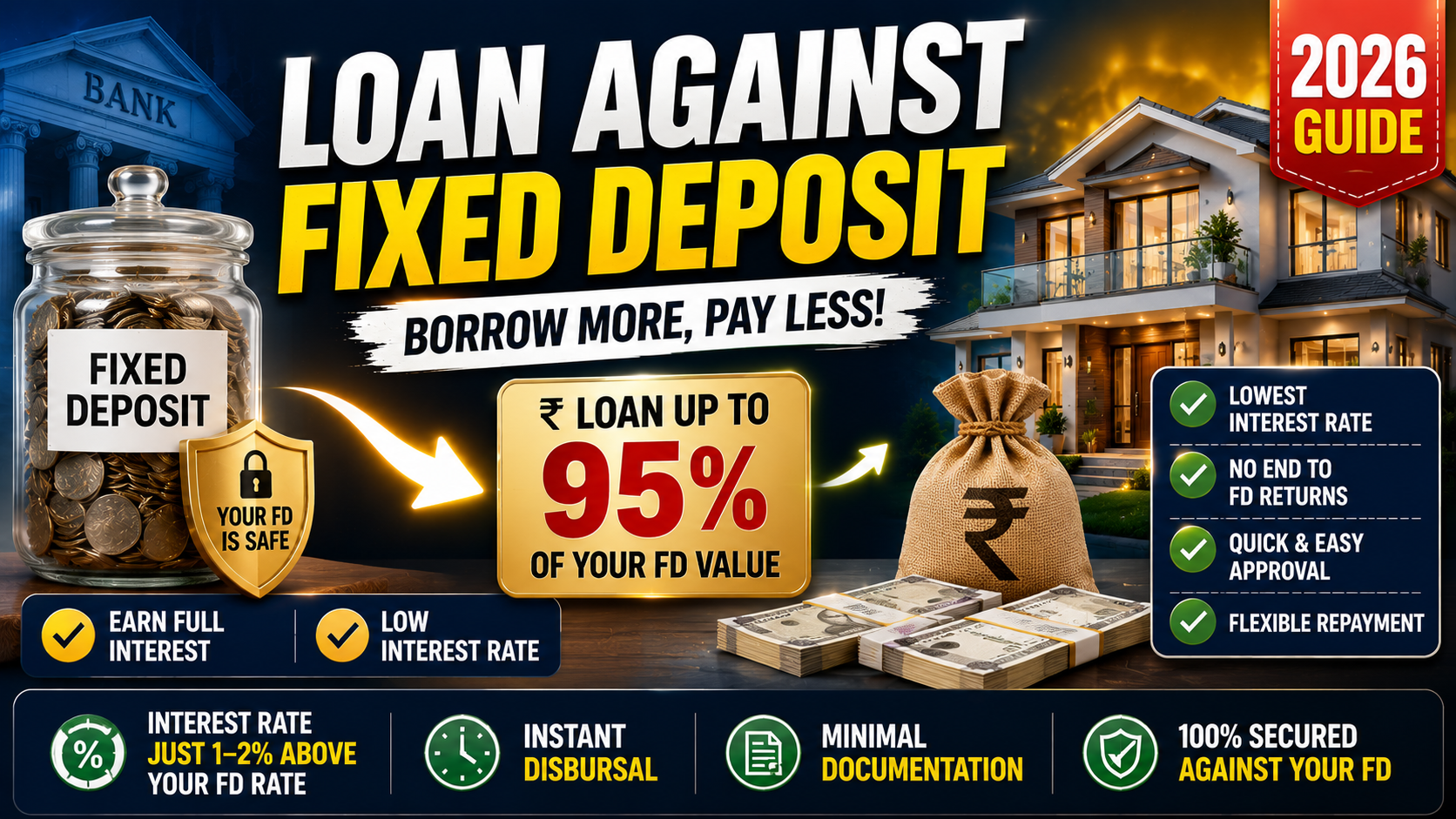
Loan Against Fixed Deposit in India (2026): Complete Guide to Features, Rates, Eligibility & Smart Strategies
In 2026, Loan Against Fixed Deposit (LAFD) remains one of the smartest, lowest-cost ways to unlock liquidity without breaking your savings. With FD rates still hovering in the 6-7.75% range, LAFD lets you borrow at just 1-2% above your deposit rate while your FD continues earning full interest. This creates a net borrowing cost that is often 70-80% lower than personal loans or credit cards. This guide draws on the latest June 2026 policies from SBI, HDFC, ICICI, Axis, Yes Bank, and RBI guidelines to help you use this facility effectively and responsibly.