
PNB Kiwi Credit Card Honest Review 2026: Lifetime Free UPI Cashback Card or Hidden Fee Trap?
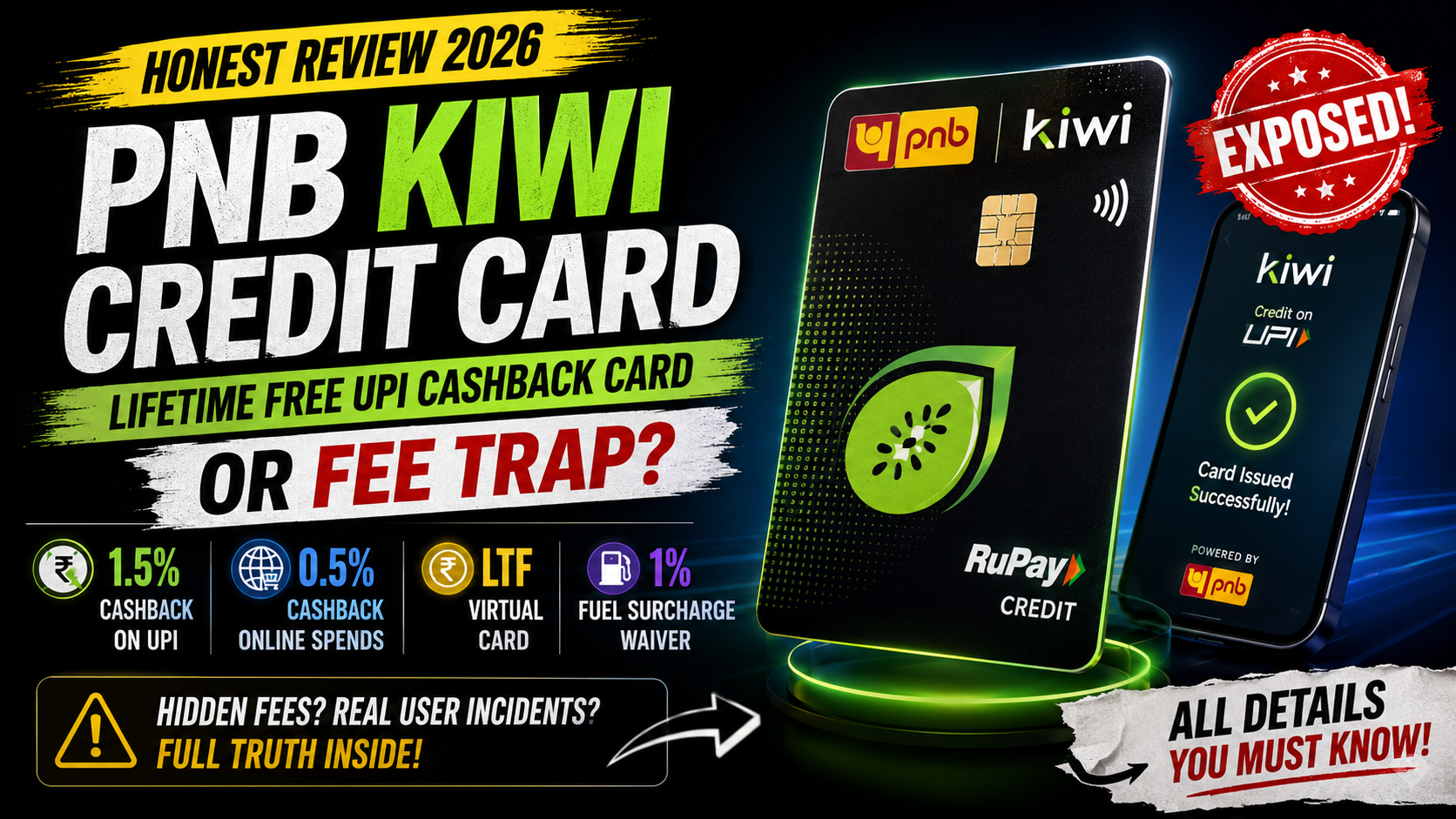
The PNB Kiwi Credit Card launched in April 2026 as a RuPay virtual UPI credit card aimed at PNB's existing customer base. The stated benefits include 1.5% cashback on Scan and Pay UPI transactions, 0.5% on online spends, and zero annual fees. However, a discrepancy has emerged between how the card was communicated at launch and what the PNB portal actually shows - some users have been told the card is Lifetime Free, while the portal displays a Rs 750 annual fee and a Rs 500 physical card fee, both waivable on Rs 1.5 lakh annual spend. This review cross-verifies the official PNB and Kiwi terms, the gokiwi.in rewards policy, and the updated fee schedule to give you an accurate picture of what this card costs and delivers as of May 2026.
In This Complete Review
- Launch Context: Why PNB Kiwi Exploded in 2026
- The LTF Controversy: Support Says vs PNB Portal Shows
- Fees: The Full Breakdown (May 2026 Reality)
- Rewards Structure and Cashback Math
- Maximization Hacks and Portfolio Tips
- Real User Incidents and Community Voices
- Pros and Cons
- PNB Kiwi vs Other UPI Credit Cards 2026
- Final Verdict and Who Should Apply
- Frequently Asked Questions
Launch Context: Why PNB Kiwi Exploded in 2026
PNB partnered with fintech Kiwi (previously tied to Yes Bank, Axis, and AU Small Finance RuPay cards) to launch India's first major PSU-backed credit-on-UPI card in April 2026. The card is fully digital, issued instantly as a virtual card via the Kiwi app, and runs on RuPay for 100% UPI QR compatibility - including small kirana stores that do not accept Visa or Mastercard UPI credit cards.
Official launch claims (PNB statement via Livemint and Economic Times, April 23, 2026): No joining fee, no annual fee, 1.5% cashback on UPI Scan and Pay, 0.5% on online spends, 1% fuel surcharge waiver, and direct cashback to bank account - not restricted reward points. A marketing blitz on Instagram and X called it a zero rupee Lifetime Free credit card, and support chats and app confirmations echoed LTF for the virtual or digital version. Physical card was positioned as an optional add-on.
The LTF Controversy: What Support Says vs What PNB Portal Shows
Here is where transparency broke down. Multiple users report the same pattern: pre-approval, Kiwi support and the app explicitly said the digital PNB Kiwi Credit Card is Lifetime Free and physical costs Rs 499. Post-approval, the PNB website and portal shows Rs 750 annual fee plus Rs 500 physical card fee, with waiver only after Rs 1.5 lakh yearly spend. A second support call then says annual fees may apply on both variants.
- X (@CREDBANKYT, May 6-8, 2026): Screenshots posted showing PNB site fees vs Kiwi LTF confirmation, tagging @GoKiwiNow and RBI. Thousands of views, dozens of similar replies from affected users.
- Reddit r/CreditCardsIndia (May 2026): 'KYC agent said LTF, now portal shows fees.' TechnoFino users uploaded approval chat screenshots alongside the fee schedule.
- Official clarification (as of May 10, 2026): Virtual or digital card remains marketed and largely treated as LTF by Kiwi, with no auto-renewal fee reported for early users.
- Physical card incurs Rs 500 issuance fee plus potential annual charges routed via PNB. Waiver kicks in at Rs 1.5 lakh annual spend for most variants.
- Neon upgrade (optional Rs 999 plus GST per year) unlocks higher reward tiers but is not required for base LTF status.
- RBI has been tagged multiple times on X - expect possible nodal complaints or official clarifications soon.
Bottom line: the card is effectively LTF for virtual-only users who stay digital, but poor pre-approval disclosure has created serious trust issues. The gap between marketing and reality is the single biggest problem with this product launch.
Fees: The Full Breakdown (May 2026 Reality)
| Fee Type | Virtual Card | Physical Card |
|---|---|---|
| Joining Fee | Rs 0 | Rs 0 |
| Annual Fee (marketed) | Rs 0 LTF | Rs 750 + GST |
| Physical Card Issuance | N/A | Rs 500 |
| Annual Spend Waiver | Rs 1.5 lakh | Rs 1.5 lakh |
| Neon Upgrade (optional) | Rs 999 + GST/year | Rs 999 + GST/year |
| Fuel Surcharge Waiver | 1% on Rs 500-Rs 4,000 txns | 1% on Rs 500-Rs 4,000 txns |
| Interest Rate | Up to 42-44% p.a. (pay in full) | Up to 42-44% p.a. (pay in full) |
| Foreign Transaction Fee | Standard applies | Standard applies |
Rewards Structure and Cashback Math
From gokiwi.in Rewards Policy v2 (effective June 2025, applies to 2026 PNB cards): rewards are credited as Kiwis which transfer directly to your bank account. Minimum 500 Kiwis equal Rs 125 for redemption. Monthly cashback is capped at 1% of your credit limit.
- 1.5% cashback on Scan and Pay (UPI QR transactions) - minimum Rs 100 per transaction
- 0.5% cashback on online spends (Amazon, Flipkart, etc.)
- 1% fuel surcharge waiver on transactions between Rs 500 and Rs 4,000
- Cashback credited to bank account within 7 days - no voucher lock or expiry drama
- Monthly cap: 1% of assigned credit limit
Excluded Categories (No Cashback)
- Government services and payments
- Utilities and electricity bills
- Insurance premiums
- Fuel stations (surcharge waiver only, no cashback on base amount)
- Rent payments
- Jewellery and gold purchases
- Education fees
- Wallet loads and prepaid top-ups
- Real estate transactions
- Transactions below Rs 100
- Refunds and payment intent failures
Realistic Cashback Math: Rs 20,000 Monthly Spend
| Spend Category | Amount | Rate | Cashback Earned |
|---|---|---|---|
| UPI QR (groceries, kirana, restaurants) | Rs 12,000 | 1.5% | Rs 180 |
| Online (Amazon, Flipkart) | Rs 6,000 | 0.5% | Rs 30 |
| Fuel (surcharge waiver) | Rs 2,000 | 1% waiver | Rs 20 |
| Total | Rs 20,000 | ~1.15% blended | Rs 230/month |
At Rs 1.5 lakh annual spend (Rs 12,500/month), the fee waiver triggers and effective annual cashback is approximately Rs 2,250-2,750. With the Neon upgrade (Rs 999/year) and heavy UPI use above Rs 50,000/month, milestones push to 3-5% effective return - netting roughly 4.2% after the Neon fee for serious UPI users.
Maximization Hacks and Portfolio Tips
- 1
UPI-first strategy: Route all Scan and Pay transactions - kirana, pharmacies, local restaurants, petrol pumps via QR - through the Kiwi PNB card for instant 1.5%. These are the spends most other cards ignore.
- 2
Stay virtual-only: Skip the physical card to remain truly LTF. Add the virtual RuPay card to Google Pay or PhonePe for contactless POS use where needed.
- 3
Neon math check: Only upgrade to Neon (Rs 999/year) if you genuinely spend Rs 12,000+ per month on eligible UPI QR. Below that, base LTF is more efficient.
- 4
Bill pay rotation: Route utilities, insurance, and rent through SBI Cashback Card or IDFC FIRST Millennia instead. Kiwi earns zero on these - do not waste the swipe.
- 5
Stack with IDFC Millennia: Use Kiwi for everyday UPI QR, IDFC Millennia post-June 2026 for dining and travel 10X, and SBI Cashback for non-UPI online. This trio covers 95% of monthly spends efficiently.
- 6
Credit limit growth: Spend 30-50% of your assigned limit each month, pay in full, then request a limit increase after 3 months. PNB credit card team is responsive on limit hikes for good payers.
- 7
Screenshot everything: Given the LTF controversy, screenshot every support chat, approval message, and fee disclosure. This is critical if you ever need to raise a nodal complaint.
Real User Incidents and Community Voices (May 2026)
- X (@CREDBANKYT, May 8, 2026): Exact screenshots shared - Kiwi support confirmed LTF before approval, PNB portal showed Rs 750 annual fee post-approval. Post received 500+ views with reposts calling for RBI intervention.
- Reddit r/CreditCardsIndia (May 2026): Multiple threads with the same pattern - KYC agent said LTF, portal shows fees. Video KYC approval delays of 7-15 days also widely reported.
- X users (May 2026): Reports of Rs 590 random amount appearing as due post-approval with zero transactions, app linking issues between PNB net banking and Kiwi, and generic CS responses to complaints.
- TechnoFino forum: Users uploaded side-by-side approval chat vs fee schedule comparisons. Community consensus: virtual-only users safe, physical card is the fee trigger.
- Positive reports: '1.5% on daily UPI is real cash - best card for Rs 10,000-15,000/month kirana and local spends where Visa and Mastercard UPI cards are often declined.'
- Trustpilot and Reddit CS rating: Below average on response quality. Transparency score: Poor due to the marketing vs reality gap on fees.
Pros and Cons
PNB Kiwi vs Other UPI Credit Cards 2026
| Card | Base UPI Cashback | Annual Fee | Best For | Verdict |
|---|---|---|---|---|
| PNB Kiwi | 1.5% Scan and Pay | LTF (virtual) | Daily QR spends at kirana and local | Strong if LTF holds - best pure UPI cashback |
| IDFC FIRST Millennia | 3X regular, 10X dining/travel (post-June 2026) | True LTF forever | Dining, travel, international | Higher % on targeted categories, not pure UPI |
| Slice UPI CC | Variable cashback | LTF | Students and first-time credit users | No CIBIL barrier, weaker rewards vs Kiwi |
| SBI SimplyCLICK | 0.25-1.25% online | Rs 499/year (waivable) | Amazon, Cleartrip, BookMyShow | Better online, no UPI rewards |
| Axis Ace | 2% all spends (capped post-2025 deval) | Rs 499/year | Utility bills via Google Pay | Useful for bills where Kiwi earns zero |
Final Verdict and Who Should Apply
The PNB Kiwi Credit Card earns a 4/5 for light UPI users. It delivers genuine 1-1.5% cashback on the spends most premium cards ignore - kirana stores, local restaurants, small merchants - while being fully virtual and lifetime free. It is one of 2026's better entry-level options for credit-on-UPI. But the LTF fee confusion is a serious red flag that demands transparency from PNB and Kiwi. Always screenshot your pre-approval support communication.
Apply If:
- You spend Rs 8,000-20,000 per month primarily via UPI QR at local shops, restaurants, and pharmacies.
- You have a CIBIL score of 650+ and want a zero-fee entry to the credit-on-UPI ecosystem.
- You are an existing PNB account holder (faster approval, easier KYC pipeline).
- You are comfortable staying virtual-only to avoid the physical card fee ambiguity.
- You want real cash in your bank account within 7 days, not vouchers or points with expiry.
Skip If:
- Most of your monthly spend is on utilities, insurance, rent, or government payments - Kiwi earns zero here.
- You hate CS runarounds or need reliable support for disputes.
- You need a high credit limit from day one for large purchases or EMIs.
- You travel internationally frequently - better forex-optimised options exist.
- You want unlimited lounge access or milestone travel benefits.
Application tip: Download the Kiwi app, select the PNB variant, complete Video KYC promptly, and check pre-approved offers first. Always screenshot every support chat and fee disclosure shown during onboarding. Monitor the PNB portal within 48 hours of approval to verify the fee terms match what was communicated.
Frequently Asked Questions
Is the PNB Kiwi Credit Card truly lifetime free with no annual fee?
The virtual or digital version is marketed as lifetime free by Kiwi and PNB. However, the PNB portal and some support agents have shown Rs 750 annual fee with a Rs 1.5 lakh spend waiver - particularly for the physical card variant. The safest approach is to stay virtual-only and screenshot every fee communication at the time of application. If charged, file a nodal complaint with PNB citing the pre-approval LTF representation.
What is the exact cashback rate on the PNB Kiwi Credit Card?
1.5% cashback on UPI Scan and Pay transactions (minimum Rs 100 each), and 0.5% on online spends. Monthly cashback is capped at 1% of your assigned credit limit. Cashback is credited as Kiwis and transferred directly to your bank account within 7 days - minimum 500 Kiwis (Rs 125) required for transfer.
Does the PNB Kiwi card work with Google Pay and PhonePe?
Yes. As a RuPay virtual credit card, the PNB Kiwi card can be linked to Google Pay and PhonePe for both UPI QR payments and contactless POS transactions. This is its key advantage over Visa and Mastercard UPI credit cards, which are declined at many small merchants.
What is the Neon membership and is it worth it?
Neon is an optional paid upgrade at Rs 999 plus GST per year. It unlocks higher cashback milestone tiers (3-5% effective on UPI spends above Rs 50,000/month), additional lounge access, and other perks. It is worth it only if you genuinely spend Rs 12,000+ per month on eligible UPI QR categories. Below that threshold, the base LTF card delivers better net value.
What categories are excluded from cashback on PNB Kiwi?
Utilities, electricity, insurance, rent, government services, education, jewellery, fuel (only surcharge waiver applies), wallet loads, real estate, and transactions below Rs 100 all earn zero cashback. These exclusions cover a large portion of typical monthly bills, which is why pairing with SBI Cashback or IDFC Millennia for those categories is recommended.
What should I do if PNB Kiwi charges an annual fee after promising LTF?
First, raise a dispute directly in the Kiwi app and PNB credit card portal citing the LTF communication. Screenshot all pre-approval support chats. If unresolved within 30 days, file a complaint with PNB's nodal officer and escalate to RBI Ombudsman (bankingombudsman.rbi.org.in). Multiple users have already tagged RBI on X about this issue.
How does PNB Kiwi compare to IDFC FIRST Millennia post the June 2026 update?
Both are lifetime free, but they serve different use cases. PNB Kiwi gives 1.5% flat on any UPI QR transaction anywhere - ideal for kirana, local shops, small merchants. IDFC Millennia post-June 2026 gives 10X (approximately 2.5-5%) on dining, travel, and international specifically. For pure everyday UPI coverage, Kiwi wins. For dining and travel ROI, Millennia wins. Together they form a strong zero-fee UPI-plus-category combo.

Himangshu Mishra
Personal Finance Writer & Credit Card Analyst
3+ years researching Indian credit cards, banking products, and personal finance. Tracks RBI policy changes, bank fee revisions, and reward programme devaluations in real time.
Related from Credit Cards
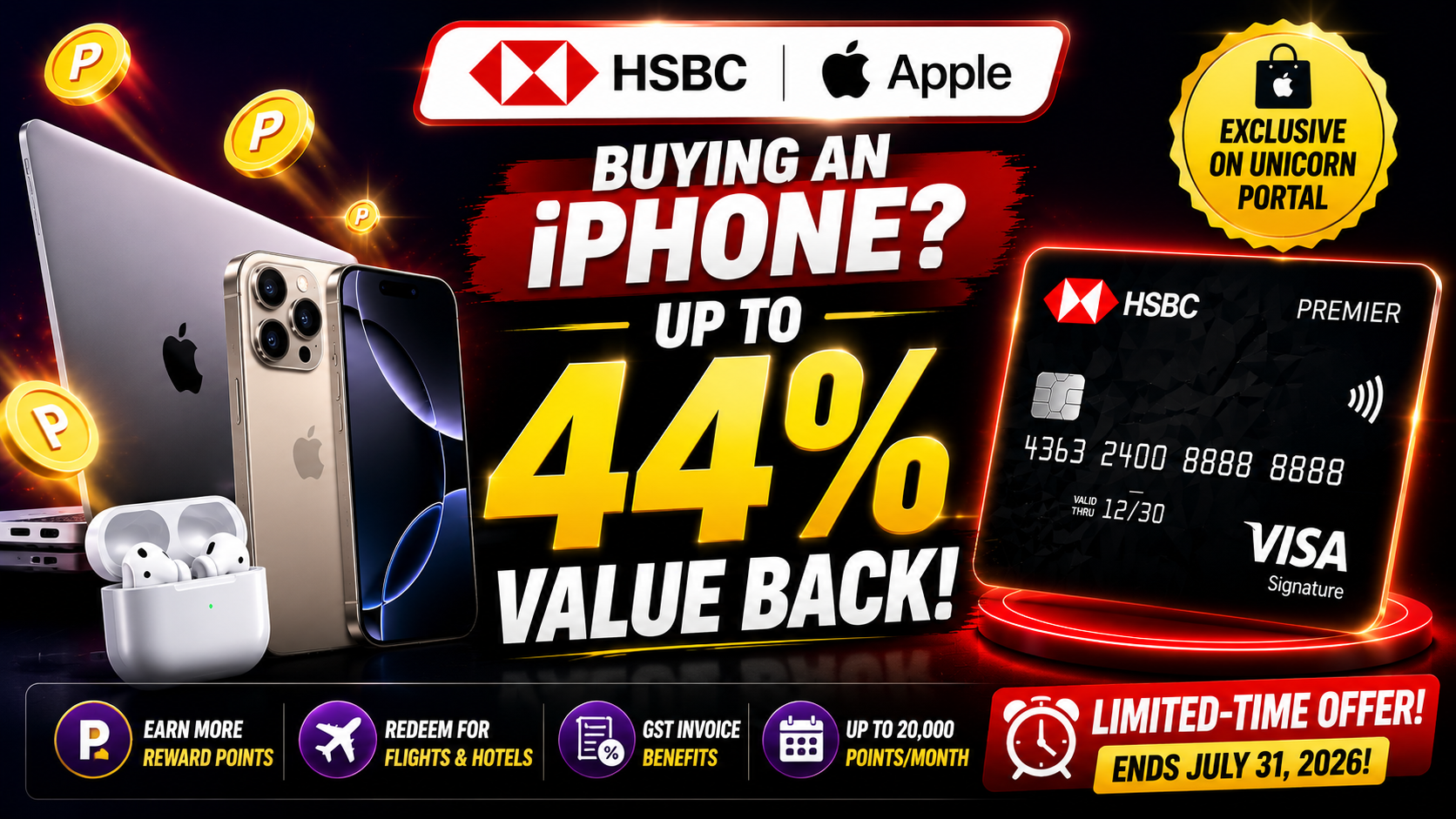
Maximizing Value on Premium Tech: HSBC's Accelerated Rewards Offer on Apple Products Through the Unicorn Portal
Apple products command a premium in the Indian market for good reason. From the seamless ecosystem integration of iPhones and MacBooks to the reliability of AirPods and iPads, these devices represent not just gadgets but long-term investments in productivity, creativity, and lifestyle. Yet their high price tags often prompt savvy buyers to seek ways to offset costs. HSBC has stepped in with a structured opportunity that transforms these purchases into a high-yield proposition for eligible credit cardholders. By routing transactions exclusively through the dedicated HSBC-Unicorn portal, cardholders can unlock accelerated reward points that deliver meaningful returns when redeemed strategically.
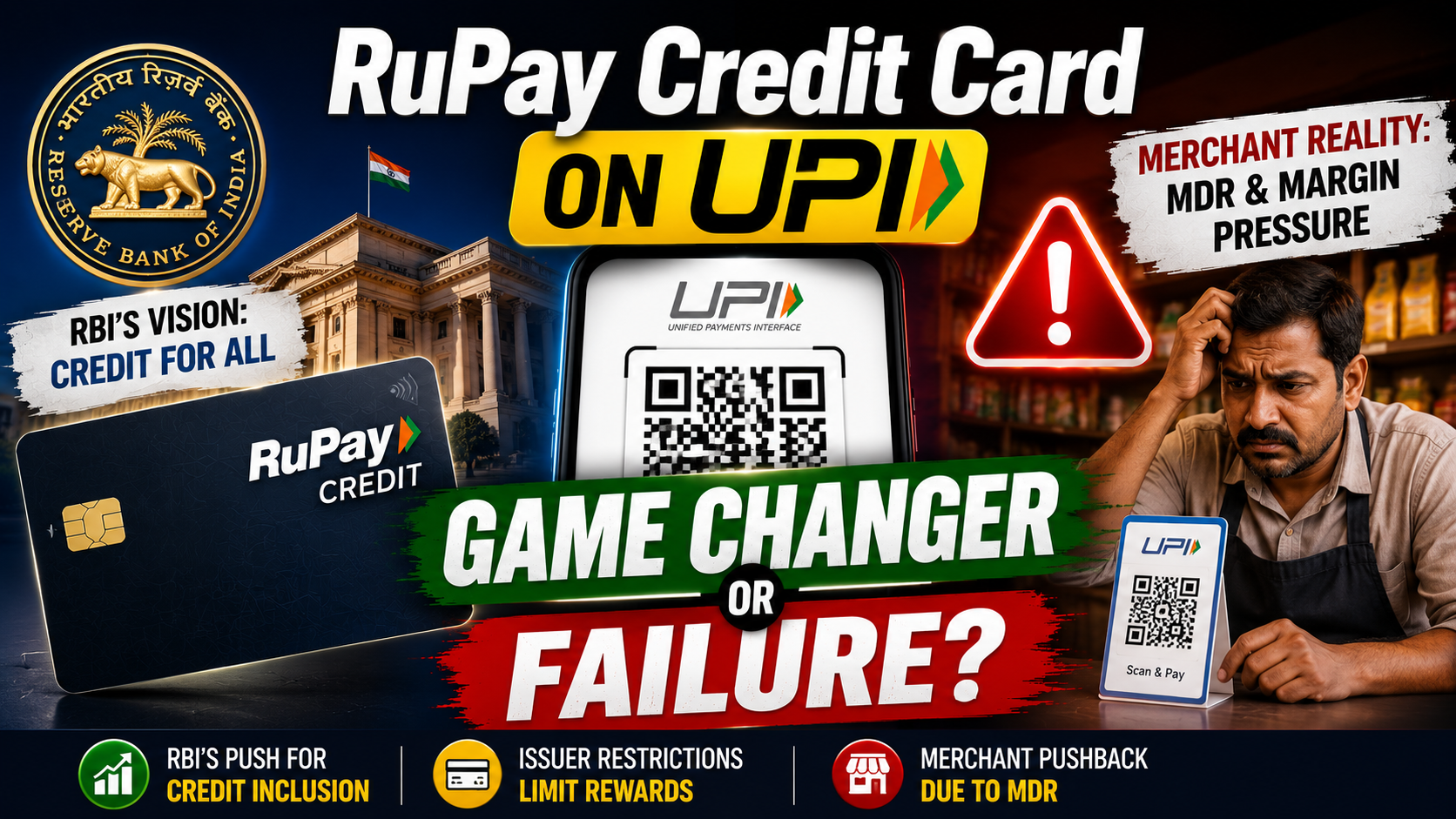
RuPay Credit Cards on UPI: RBI’s Ambitious Push for Credit Inclusion Meets Issuer Caution and Merchant Pushback
India’s payments ecosystem stands as one of the most dynamic in the world, with the Unified Payments Interface (UPI) handling billions of transactions monthly and reshaping how money moves across the country. Against this backdrop, the Reserve Bank of India (RBI) and the National Payments Corporation of India (NPCI) have long viewed the integration of RuPay credit cards with UPI as a pivotal lever for expanding formal credit access. By linking RuPay credit cards to UPI apps, consumers gain the ability to pay at millions of QR code-enabled merchants without needing a point-of-sale (POS) terminal-combining the instant convenience of UPI with the credit flexibility and rewards typically associated with plastic cards.
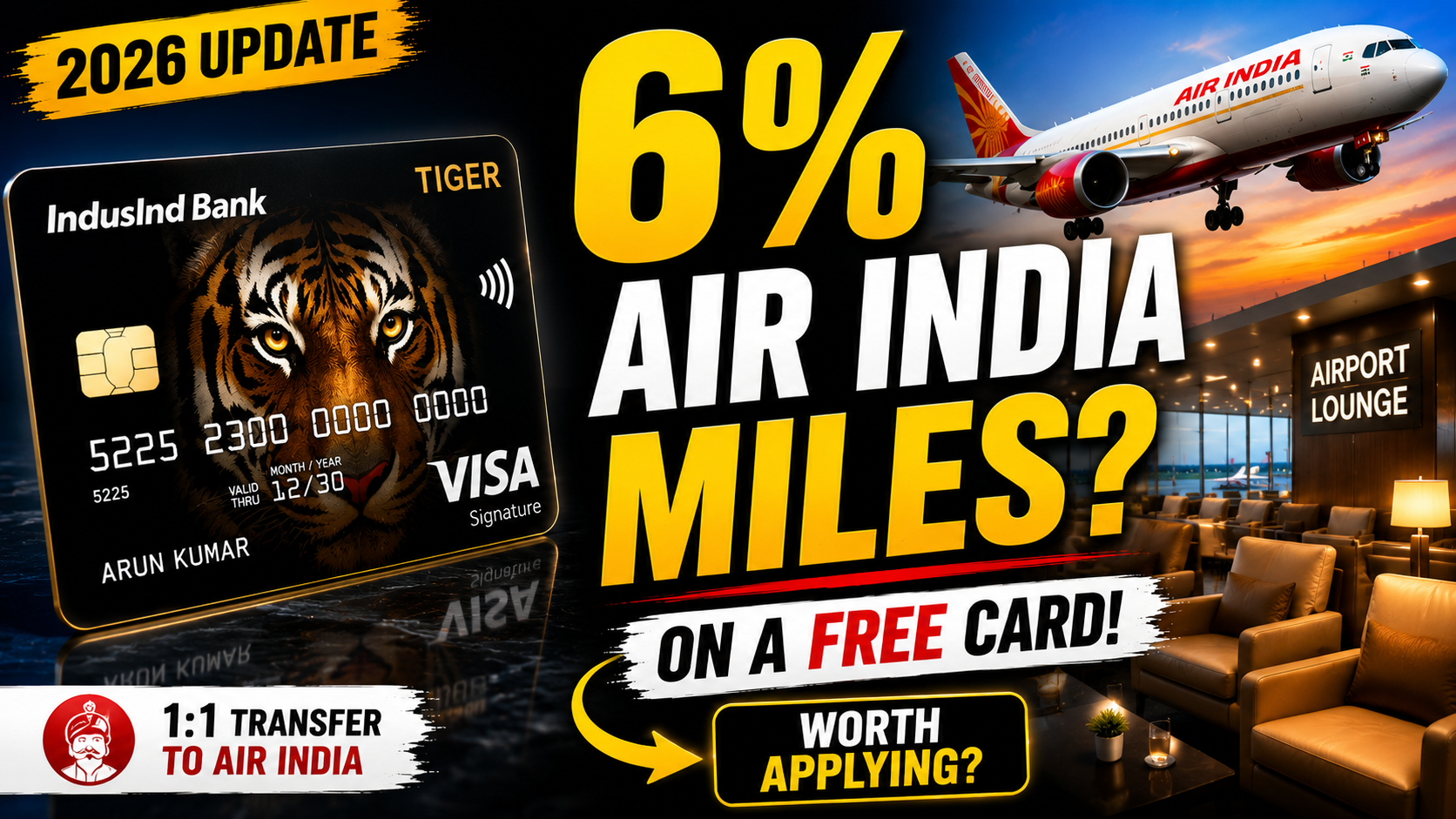
IndusInd Tiger Credit Card Review 2026: Lifetime Free with 6% Air India Miles & Unlimited Lounges
The IndusInd Tiger Credit Card just got a massive upgrade in 2026. It is still completely Lifetime Free, yet now gives you up to 6% Air India miles thanks to a new 1:1 transfer ratio. On top of that you get 8 domestic lounge visits, 2 international lounges, free movies, free golf, and one of the lowest forex markups in the Lifetime Free segment. In this simple and honest review, we break down everything - rewards, eligibility, fees, lounge access, and whether this card is actually worth applying for.